Tuesday, March 17, 2026
Home Blog Page 2

Kuwait bans crypto amidst money laundering and terrorist financing fears

0

Kuwait, an oil rich country in the Middle East puts a ban on crypto transactions in the latest development. Capital Markets Authority (CMA) of Kuwait has confirmed the news in a public statement about prohibiting all virtual asset operations.

In a circular issued by CMA, it was explicitly stated on how digital assets operations will take place in the jurisdiction of Kuwait. The circular affirms that there is an absolute ban on most of the crypto operations which includes investments, payments and mining. Moreover, the authority has strictly prohibited local regulators from issuing any licenses for virtual asset services to the commercial businesses.

It is worth mentioning here that this ban does not apply to securities and other financial instruments which comes under CMA and Central Bank of Kuwait’s regulations.

The regulatory authority clarified that usually crypto assets are subject to manipulation and speculation which leads towards sharp decline in their prices. Moreover, it stated that cryptocurrencies do not have legal status and are not issued by a legal issuer or asset.

Why is Kuwait banning crypto?

CMA clarified that implementation of such regulations in the country is to fight against terror financing and money laundering evils. This is an inter department effort to ban crypto as same circulars have been issued by the Insurance Regulatory Unit, Central Bank of Kuwait and Ministry of Commerce and Industry. Pakistan has also completely banned crypto trading in the country by the start of this year due to same fears.

CMA has further warned that penalties will be imposed to those who violate the laws related to cryptocurrencies in the country as specified in Article 15 of Law No. 106 of 2013.

South Korea introduces legislation to ensure transparency in digital asset holdings

0

South Korea is taking steps towards protecting cryptocurrency users against digital asset manipulations like Terra Luna’s ecosystems, for the first time ever. Virtual Asset User Protection Bill was passed by National Assembly on 30th June, 2023 to regularize crypto industry in the country. As stated by local News Agency SBS Biz, the purpose of passing such a legislation is to protect crypto investors from manipulations and to regulate unfair trading practices in the industry.

What is Virtual Asset User Protection Bill?

According to the news agency, the purpose behind passing the bill is to ensure that Virtual Asset Service Providers assume full responsibility for user deposits and provide them with insurance. Moreover, the aim is to introduce penalties to those who indulge in misconduct of unfair crypto trading. The idea of the bill is to enforce first Capital Market Act to virtual assets with securities nature.

The step was taken by South Korea after Do Kwon, Terraform Labs founder was sentenced for four months in Montenegro for using a false passport. He is also facing criminal charges and an arrest warrant in South Korea for manipulating the markets and violating capital markets law in the country. The prosecutors say that Terra Luna token collapse was the biggest scam ever in the country’s history.

In a current development, the Financial Services Commission has also introduced a new bill which aims at requiring all details related to cryptocurrencies from firms operating in South Korea in July, 2023. It requires to submit details about holding and issuing of cryptocurrencies. The aim is to have an eye on all crypto transactions to ensure transparency. In a bid to guarantee transparency at all levels, South Korea’s National Assembly has passed a bill unanimously which makes it obligatory for all lawmakers and high rank public officials to disclose their crypto holdings. This is a huge step towards accountability and transparency related to digital assets in the country.

South Korea is known for its exuberantly expanding crypto space. Despite strict crypto related guidelines, South Korea is the hub for crypto trading and sometimes the price of Bitcoin is higher in Korean market than rest of the world.

Why Bitcoin Cash (BCH) price is rising?

Crypto markets are seeing big greens this week as Bitcoin price hits its highest this year after seeing lows for almost 13 months due to Luna de-pegging debacle and FTX exchange bankruptcy. But the news of Blackrock and other asset managers’ filing for Bitcoin ETF with SEC has sparked a life in crypto sphere. This is why, Bitcoin Cash (BCH) is showing a very positive sentiment.
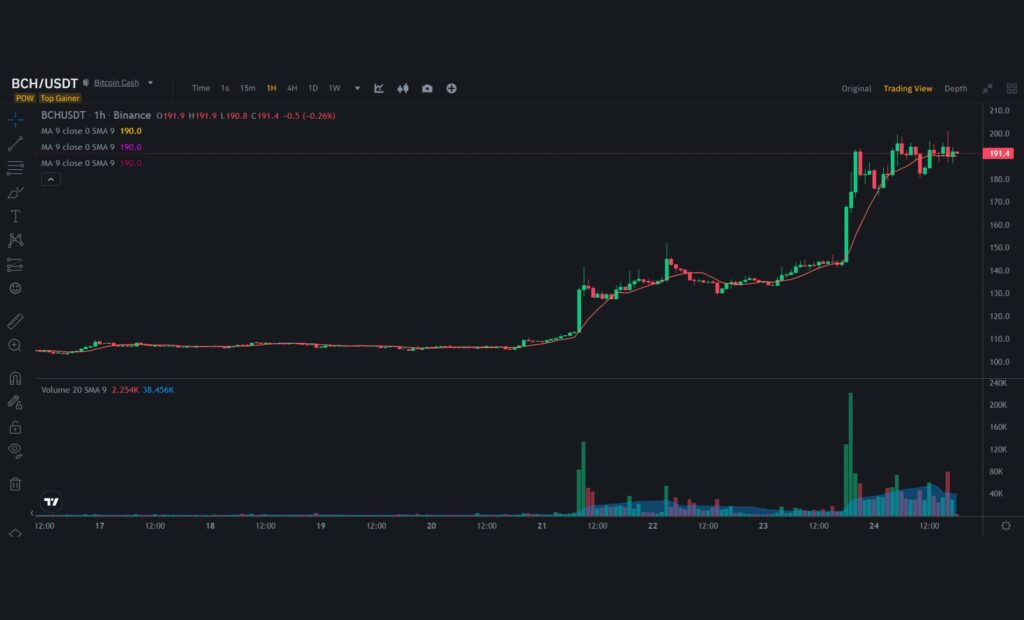
Over the last few days, Bitcoin Cash price has almost doubled, rising from $106 to $200. This increase is a direct impact from Bitcoin making new highs this year with institutional interest peaking in Bitcoin. Taking about market capitalization, BCH is the 20th valuable coin in the crypto sphere with total market capital of $3.7 billion.

Is Bitcoin and Bitcoin Cash same?

Many people confuse if Bitcoin and Bitcoin Cash are the same? No, when we say Bitcoin, it means the coin with the symbol, BTC and when we say Bitcoin Cash, it is the coin with BCH symbol. Bitcoin Cash came into existence after hard forking from Bitcoin in 2017, making it an altcoin. The fees are pretty cheap as compared to Bitcoin. Over the years, Bitcoin (BTC) price exploded exponentially and is currently at $31000 after making an ATH of $69000 but BCH price is at $191 at the time of writing and had an ATH of $1600 in 2021.

When to take profits on BCH during this current rally?

If you have bought BCH under $100 in your portfolio, then with this sudden surge in price, it is better to lock in your profits as price has pumped significantly in a short period of time. After these types of pumps, there is always a pullback. Lock in some profit at around $190-$200 and buy back if the price corrects. If it goes higher at around $300, then you can sell another 30-40% of your portfolio to maximize your profits.

Bitcoin cash (BCH) price prediction:

It is known coin and has been in crypto markets for a long period of time so whenever, Bitcoin moves, BCH performs well. In shorter timeframes, BCH is outperforming Bitcoin, Ethereum and other altcoins. BCH price, in short term. may go around $250-$300 but in longer run when bull market comes, it may surpass its all-time high value of $1600 or may even touch $2000.

Is Bitcoin Cash (BCH) a good investment over long term?

Bitcoin Cash is one of the earliest coins in crypto history and has proved time after time that it can perform well. Nothing can be said with 100% certainty in crypto but looking at the historical trends and technology behind this coin, it seems that it is a good investment and can yield good rewards in next bull cycle. Moreover, its fees for transactions are lower and has great potential for usability.

Bitcoin pumping hard as BlackRock and other asset managers file for Bitcoin Spot ETF in US

Bitcoin price has finally crossed $30,000 barrier. Last time, Bitcoin price above $30,000 was in April, 2023. Along with bitcoin, all major cryptocurrencies have appreciated in price over the last couple of days. For the time being, the FUD created by news of SEC lawsuit against Binance and Coinbase seems to be subduing.

Why Bitcoin price is pumping?

Bitcoin price dropped to $25,000 in the first week of June, 2023. Since last week, three companies have filed for Bitcoin Spot ETF, resulting in 20% price increase in a week. BlackRock, last week, filed for a Spot Bitcoin EFT. WisdomTree and Invesco also followed suit and filed Bitcoin ETF this week. Investors are growing bullish at the news of several companies filling for Bitcoin Spot ETF’s.

What is an Exchange-Traded Fund (ETF)?

An exchange-traded fund (ETF) is a pooled investment security. ETFs can be bought and sold on exchanges like stocks. ETF can track an index, an entire sector, a single asset or group of multiple assets. As ETF can hold multiple assets, it is a popular choice for diversifying portfolio.

What is a Bitcoin ETF?

A bitcoin ETF will contain only one asset i.e., Bitcoin. As the price of bitcoin moves, the price of bitcoin ETF will follow suit. By offering bitcoin as an ETF, it will be possible to trade it on traditional exchanges, like a normal stock market does.
Bitcoin ETF will not directly own bitcoin, rather crypto exchanges or private companies offering ETFs will hold the actual bitcoin.

Why is a Bitcoin ETF required?

It provides a way to invest in bitcoin, or crypto in general, without the hassle of managing crypto investment separate. A bitcoin ETF gives investors exposure to bitcoin without actually buying the bitcoin. There are quite a few reasons why investors will be willing to invest in crypto via an ETF:

  1. Ease of investing in crypto; rather than managing a separate portfolio on crypto specific exchanges, it is easier to manage all portfolio under one exchange.
  2. People are already invested in traditional financial system and will have instant access to crypto.
  3. Everyone is not tech savvy enough to handle the self-custody of crypto.
  4. People trust traditional exchanges as they are highly regulated, protect investors and provides a higher level of security.

Will SEC approve a Bitcoin ETF?

At the time of writing this article, response from SEC is still awaited. There is no indication from SEC on how it will be proceeding with latest bitcoin ETF fillings. Investors are quite bullish this time but it seems pretty unlikely that SEC will approve a bitcoin ETF in these circumstances. In case an ETF is approved it will be a huge bullish sign for the market, but it seems unlikely as we stated earlier. An outright rejection from SEC will cause a panic sell and we might test $22,000 levels again.

What is Crypto Security and why SEC declares Crypto assets as Securities?

Lately, a lot of FUD has been created in crypto market due to the news that SEC is claiming various cryptocurrencies as securities. Today we will explore that what is a security, why SEC is declaring crypto currencies as securities, is crypto a security and what impact it will have on cryptocurrencies in the long run.

What is a security?

Any investment, debt, stock, bond, share, treasury stock and collateral trust certificate that can be sold to make profit is considered a security by SEC. Securities can be bought and sold in exchanges or in over the counter (OTC) trades. Stocks are the most common type of securities traded in exchanges.

Who can issue a security?

Any entity that needs to raise capital can issue one or more type of securities. Some issue stocks, while some offer bonds and others offer future contracts.

Type of securities:

Securities can be classified into three categories i.e., Equity, Debt and Derivatives.

Equity securities represent investment in a company or an entity. Stocks are the most common type of equity securities. They offer higher return than other type of securities as greater level of risk is associated with them. The risk associated with Equity securities is twofold, e.g., investors can lose money if the price of shares drop or the company they are invested in, files for bankruptcy.

Debt securities represents a loan that can be in form of government bonds, corporate bonds or certificate of deposit (CDs). Debt securities features a loan amount, maturity date of loan and interest on loan. The investors loan money to companies or entities and debtors must pay back the loan with interest in a specified time.

Derivative securities consist of an agreement to buy or sell an asset at a specific price on an agreed date. Derivative securities can consist of any type of assets e.g., property, stocks, bond or other securities. Future contracts, Options, Swaps and forward contracts are most common types of derivative securities.

What is the role of Securities and Exchange Commission (SEC)?

SEC was established in 1933, after the Great Depression of 1929. In October 1929, majority of securities issued by various companies became worthless as many have provided false or misleading information to the public. To combat this, SEC was established to restore public confidence in securities.

SEC’s main responsibility is to ensure that entities provide authentic information about their business. Moreover, regulate exchanges, brokers and dealers so that they treat investors in a fair manner. Any type of security must be registered with SEC, before it can be sold to investors in US. Brokers, Dealers and Asset Managers must also be registered with SEC to conduct business.

Is crypto a security?

SEC has defined security in a very broad term. SEC is now seeking to regulate crypto as it does the traditional financial markets. As things stands right now crypto will be classified as a security by SEC in US.

How does it affect Cryptocurrencies?

Any crypto exchange offering services in US must be registered with SEC, along with all the cryptocurrencies that are being offered must also be registered as securities. Currently, no crypto exchange and cryptocurrencies that are being offered are registered with SEC.
In March 2023, SEC issued an investor alert, listing all the apprehensions they have regarding crypto exchanges and cryptocurrencies. Full detail is available here.

One of the main apprehension SEC has with crypto exchanges is related to financial audit. Any registration with SEC requires that the security issuer must include a financial statement audited by an independent public account firm registered with PCAOB.

What happens if crypto is a security?

SEC has already started litigation against leading crypto exchanges i.e., Binance and Coinbase for dealing in unregistered securities. It is going to be a long battle in court of law. For short term it created some FUD in crypto world and prices have been impacted significantly, but it will not last long. It seems highly improbable that crypto exchanges will be outright banned in US. Some amicable solution will be found in the longer run, but in short term uncertainty may prevail.

What is a crypto liquidity pool and how does it work?

Liquidity pool (LP) is a smart contract containing crypto assets that provides liquidity to decentralized exchanges. By investing in liquidity pool one can earn passive income from the fees collected by the liquidity pool. Beside liquidity pools, crypto holders can earn passive income by staking their crypto assets.

What is a crypto Liquidity Pool?

In a decentralized exchange, there is no order book like centralized exchanges, e.g., Binance. To provide liquidity to decentralized exchanges, Liquidity Pools are created. Major aspect of liquidity pool is Automated Market Maker (AMM). AMM uses the liquidity pool to trade digital assets automatically rather than usual trading methods of buy & sell. AMM automatically calculates the current price based on the assets in the liquidity pool.

For example, in decentralized exchange, if the user wants to convert ETH to MATIC, they will just interact with liquidity pool, provide ETH and it will instantly convert to MATIC. There is no need to place an order and then wait for order to get filled. AMM ensures that transaction is instantaneous and at current market value.

Each transaction done via the liquidity pool is charged with a small fee. The fee is then distributed to all users that provided liquidity for the specific pool. Once liquidity is provided to the pool, no action is required from the user. This makes it one of the best ways to earn passive income in crypto.

How does liquidity pools work?

To provide liquidity for ETH-MATIC, deposit 50/50 split of ETH and MATIC to the liquidity pool. In this case, you will deposit $100 worth of MATIC and $100 worth of ETH.

Then you will receive ETH-MATIC Liquidity Provider Tokens (LPT). Deposit LPT to the ETH- MATIC staking pool. That’s it, now you will start earning fee from liquidity pools.

When any one will make transaction with ETH-MATIC liquidity pool, a small fee will be charged. The fee will then be distributed based on the LPT share in the staking pool.

Risk of investing in Liquidity Pools

No investment is risk free and investing in liquidity pools is no different. There is always a prevalent threat to funds being hacked due to poor security standards. To mitigate this issue, invest in pools managed by reputable decentralized exchanges.

Beside hacking, rug pulls and exit scams are also prevalent for new tokens. Malicious actors create liquidity pools for new crypto projects and offer insane returns. Once, enough liquidity is deposited in the pool, the creator of pool withdraws deposited funds without your permission. To mitigate this issue, always research carefully before investing in new projects or depositing funds in shady decentralized exchanges.

Since AMM determines price based on the assets in liquidity pool, large transactions on small pools can lead to huge swings in prices and this can cause impermanent loss. Impermanent loss is when your share in liquidity pool is changed due to high price fluctuation.

Best liquidity pool providers 2023

Popular liquidity pool providers include Uniswap, Curve, Balancer & Pancakeswap. All these decentralized exchanges offer various liquidity pools with attractive rates.

How much can I earn investing in Liquidity Pools?

APR is calculated based on the number of transactions happening on the liquidity pool. The higher the volume of transactions, the higher the fee paid to liquidity pool. In Bear market, the transaction volume drops significantly as compared to Bull market. Over an extended period, reliable liquidity pools can provide an APR in range of 4 % to 18 %.

Conclusion

Investing in liquidity pools can help generate sustainable passive income. A portion of portfolio can be dedicated to liquidity pools. To reap good rewards, it’s best to invest in Bear market so that one can get crypto at discounted prices. Once invested in liquidity pools, in Bear market, the investment grows two folds. One, the actual investment in crypto with increase in dollars as Bull market approaches. Second, fee collected will also increase as Bull market approaches. DYOR.

What is a bull market in crypto?

Bull market terminology may sound very familiar to your ears if you have a little interest in financial markets, but you might not know what it really means and when a specific market is in a bull cycle. In this blog, we will discuss in detail, what a bull market is especially with regard to crypto?

You may have seen that when a bull attacks, it lifts one up and tosses in the air. The same happens with financial markets when prices of the assets start rising high, it is the start of a bull market or bull run. During bull run, markets show great confidence from investors and demand escalates as compared to supply. This goes for both traditional and crypto markets. When bull market comes, optimistic sentiments are on the rise from investors and prices of assets shoot up in a short span of time.

What do we mean as ‘Bullish’?

Bullish means that you as an investor or holder are hopeful that price of an asset will significantly rise from current levels.

As compared to traditional markets, crypto markets are highly volatile and they do not always follow traditional economic patterns. When Bull cycle hits, prices of crypto assets may rise 40-50% in a couple of days which is uncommon for other economic markets.

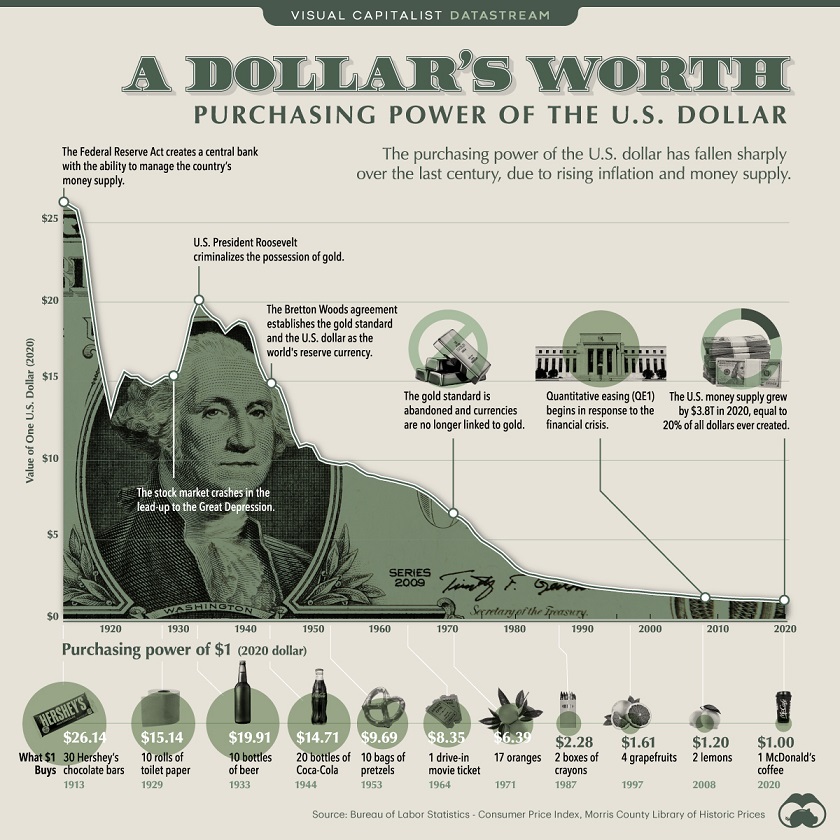
Sometimes crypto markets show bullish trend when investors lose confidence in traditional financial market. This was lately experienced when USA was printing dollars to support its crippling economy and USD was losing its value so people started investing in Bitcoin and other crypto assets.

Will we see crypto bull run in 2023?

Well, it seems pretty unlikely that markets will see a bull run in 2023 as overall condition of stock markets and economies worldwide does not look very encouraging. Investors are showing more interest in gold and oil which is why, their prices have increased significantly over a couple of years. Inflation is on rise and businesses have been dented pretty hard. US keeps on printing dollar which is resulting in its devaluation. So, it appears that before a strong start of a bull run in crypto, markets will see a capitulation first, then we will see an increased demand of crypto assets, as happened in March 2020 when Bitcoin dropped to $3800. Although I do not see Bitcoin going down to $3800 again but it will see a significant drop which will then create a buying pressure due to lower prices and then we will see a boom in crypto markets.

When will be the next crypto bull run?

Crypto markets last cycle, experienced a massive bull run where Bitcoin price rose from $3800 to $67000 from March 2020 to November 2021. This exuberant growth in Bitcoin and crypto asset makes people questioning that when will we see the next bull run?

Many crypto analysts are suggesting that next crypto bull run will start in 2025. Although no one can predict anything with certainty in crypto as multiple factors impact these digital markets, but by analyzing previous trends we hope that next bull run will be in 2025.

Why analysts think that 2025 will be the bull year for crypto?

Well, they say that history repeats itself and that is very true for crypto. Crypto world had seen massive bull run in 2017 and as expected right after 4 years, we all experienced another massive bull cycle 2021 which created many new millionaires in a very short span. Although many other indicators help predict next bull market, but if history keeps repeating, we will see next bull run in 2025.

What usually triggers a crypto bull market?

Crypto bull market is usually triggered by many factors but mainstream and social media plays a significant role which is very uncommon for other financial markets.

• A single good news about a coin can surge prices.

• Investors show confidence in market and then public follow suits.

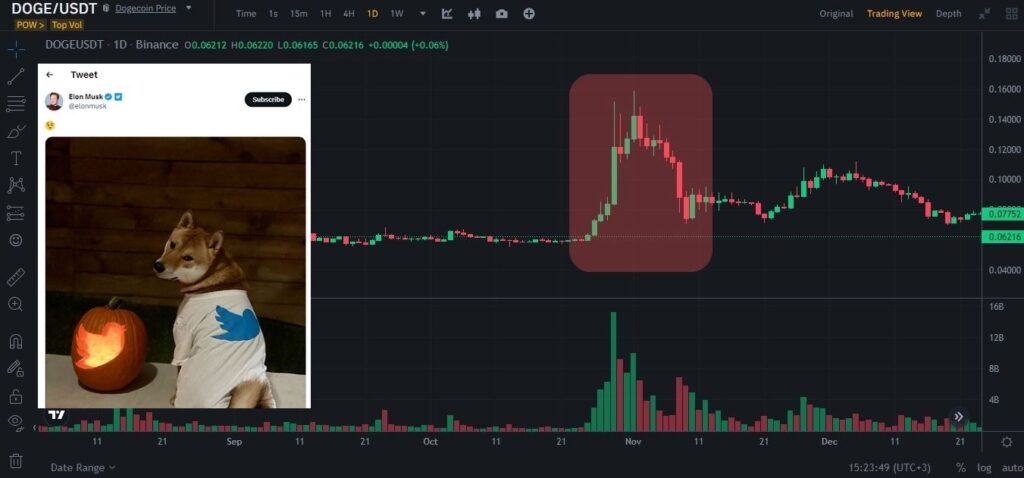
• Big names like Elon Musk’s single tweet can lead to a 20 to 30% price increase in Dogecoin (a meme coin) making it one of the top ten coins according to market cap.

• MicroStrategy’s announcement about its buying of a significant number of Bitcoin always end up creating a positive sentiment in crypto market.

Don’ts for a potential bull market:

1. If you are a beginner and you find yourself amidst of a bull cycle after hearing shooting prices of Bitcoin and other crypto coins then the best strategy for you is to trade. You should make sure to take profits along the way as drops may occur sooner than you expect. Many people lost millions of dollars in anticipation that prices may go further in last bull cycle of 2021 but end up losing all of it. This is why, as the prices go up, take profits and have liquidity to buy those sharp dips to maximize your profits.

2. If you have bought crypto coins during a bear market at pretty low prices then best strategy for you is to hold your coins and wait for Bitcoin to reach its ATH as other coins will follow suit. Once BTC touches new high, start locking your profits in.

3. Always remember that corrections do occur during bull markets. Financial markets especially crypto does not always go up in a straight line. Corrections are a part of bull markets and when a market corrects, that is a good time to buy the dip. Many people consider 30% to 40% dip as start of a bear market but that can just be a momentarily price correction. You should look at price action over longer time frames so that you do not panic sell all of your assets. Be patient and give some time to markets for recovery after a drop.

How to prepare for a bull market?

1. If you are just beginning to invest in crypto and are currently experiencing the bear market and continuously losing on trades then it is best time for you to prepare for bull market. This is the time for accumulating coins so that you can prepare yourself for 10x, 20x or 30x profit margins that can only be achieved in a bull run.

2. Diversify your portfolio by investing in 6-8 coins and when a couple of them touch all time high, sell them and invest in other well-established coins which have not exploded yet. In a bull market, everything goes up even the weakest of the project can easily make 20x to 30x.

3. Bear markets are the best times to prepare for a bull run. Learn about different coins, about their development team and the projects they have worked on previously. Based on this, invest in coins that have sound technical team with a proven track record. The research you will do in bear market will enable you to understand about great projects and investing in those projects will generate great profits eventually.

4. Meme coins can also produce immense gains during a bull run. But you have to be careful and not putting all eggs in one basket. Make sure to invest only 10% in meme coins as the quickly they shoot in price, the sooner and sharper they dip as investors usually withdraw their money first from meme coins.

Staking vs Liquidity Pools vs Lending – What’s the difference?

Staking & Liquidity Pools are two of the best ways to earn passive income with cryptocurrency in 2023. Both Staking and Liquidity Pools require some technical know-how to operate. People often confuse them with lending solutions, offered by exchanges, but in reality, there is no similarity between Staking or Liquidity Pool and lending.

Lending is the same concept in crypto as it is in the traditional financial system. The funds are deposited in exchanges and are lent out to people by exchanges for a specific period of time and interest is accrued in the process. Profit in lending is made via interest collected in the process.

Where as in Staking and Liquidity Pool, the funds provided are either used for strengthening the network and handling transaction on the blockchain or to provide liquidity for DeFi exchanges. No interest is involved in the process and profit is generated by the fees collected for verifying transaction on the network or by charging a small percent fee while swapping crypto assets.

What is Staking?

In Staking, the crypto assets are locked to help strengthen the network and support operations on blockchain. Fees are collected from the transaction performed on the network and are distributed based on the amount of crypto assets locked. Normally, the longer the duration of assets being locked, the higher percentage of fees is earned. There are certain risks associated with Staking that are discussed in detail here.

What are Liquidity Pools?

Liquidity Pools are a way to provide liquidity to decentralized exchanges. Crypto assets are clubbed together in a smart contract creating Liquidity Provider Tokens (LPT). These tokens are then deposited in liquidity pools. In decentralized exchanges there is no order book and to trade crypto assets the transaction has to be made via Liquidity Pools. Each transaction incurs a small fee and based on percentage of LPT, the fees are dispersed. Investment in Liquidity Pools can lead to impermanent loss, discussed in detail here.

Key Takeaway Points

1. In Staking and Liquidity Pools, profit is generated in forms of fees collected rather than interest.

2. Staking deals with the operation on the blockchain, where as Liquidity Pools are used to provide liquidity to decentralized exchanges.

3. Both are a good way to earn passive income in crypto but like any other investment carries risks. DYOR.

Conclusion:

Staking and Liquidity Pools can be a good way to diversify your crypto portfolio. Before investing, do comprehensive research that how things work and the risks associated. Investing in both will require you to have technical know-how of crypto, DeFi & decentralized exchanges.

Market Analysis – Robinhood to Delist Top 3 Cryptocurrencies

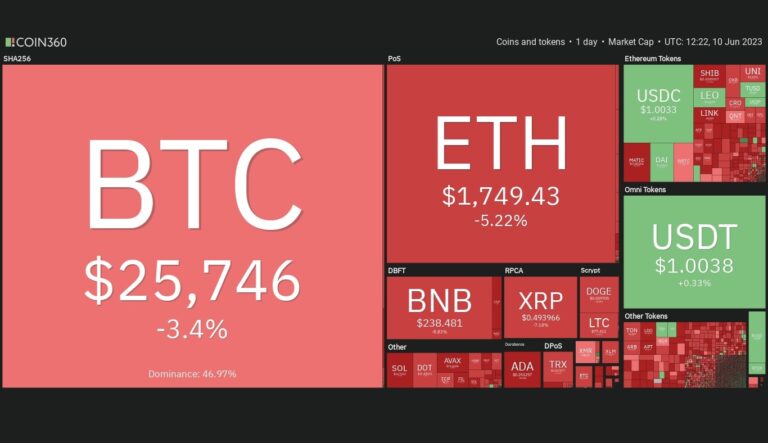
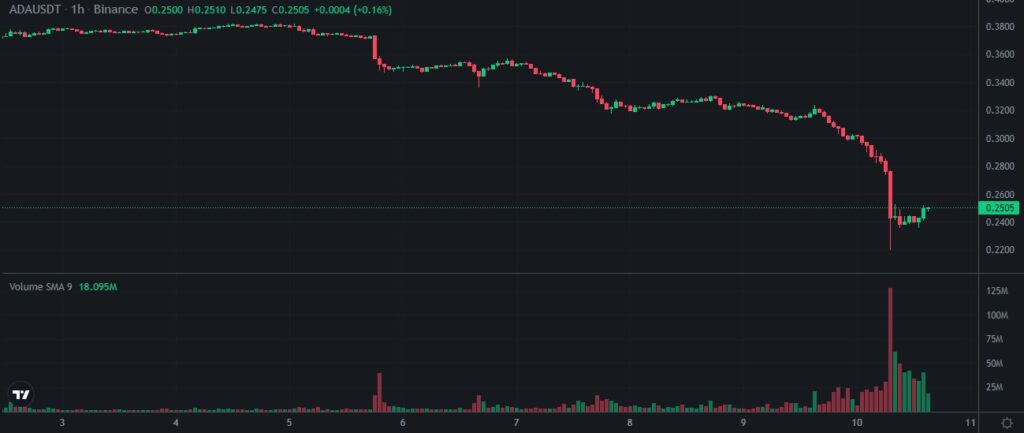
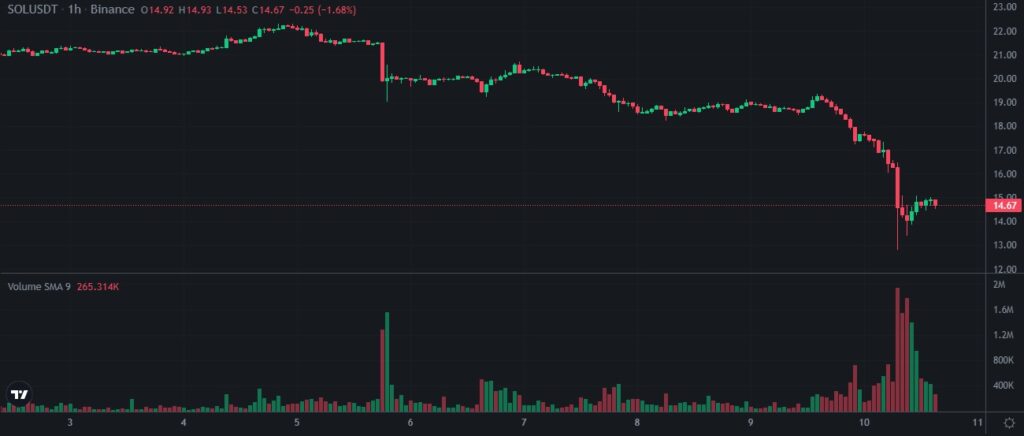
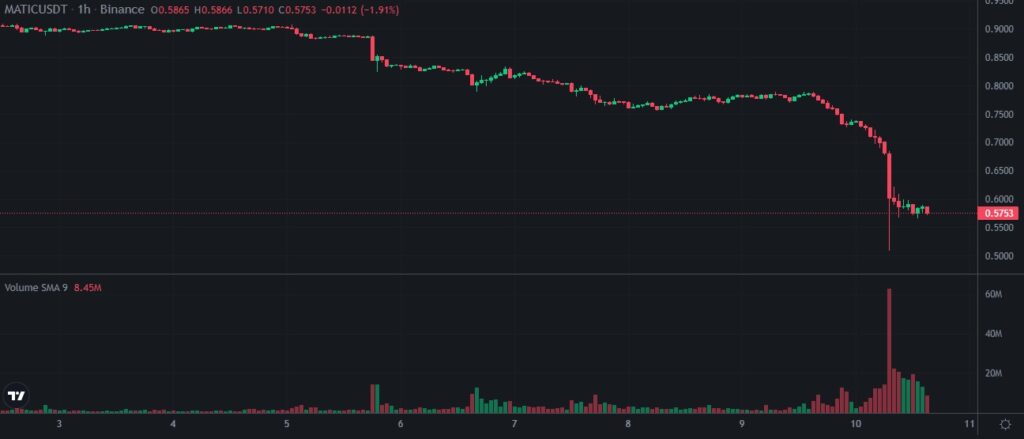
Crypto market is seeing a massive red day again with many top cryptocurrencies seeing a drop of almost 15% to 25%. The development happened after Robinhood; the US Stock Trading app has decided to delist 3 top crypto coins after SEC named them as Securities in a lawsuit against Coinbase. The delisting will happen after June 27 and it includes coins like Polygon (Matic), Solana (SOL) and Cardano (ADA).

Robinhood said in a statement that investors will be able to withdraw their tokens from exchange and transfer somewhere else till 27th June. After that, all of their tokens will be sold immediately on market price and converted to fiat in their accounts.

This delisting news led to a sharp decline in altcoin prices over the weekend with Matic leading downward trend of 30% in a few hours. Following the trend, ADA and Solana also dropped almost 26%.

Amid the news of lawsuits and delisting, crypto markets are showing tremendous weakness making situation a bit tacky for crypto investors. Recently it all started with SEC initiating a lawsuit against Binance and it created volatility in market.

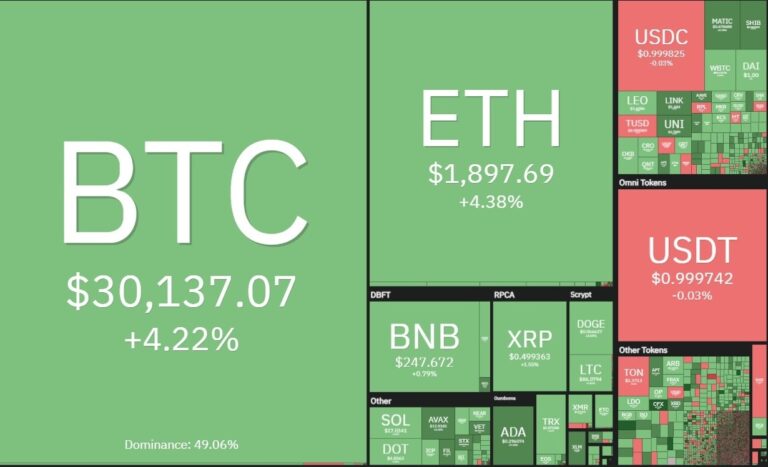
Despite all red candles on altcoins, weekend does not look too shabby for Bitcoin with only price drop of 4%. Bitcoin dominance has significantly increased up to 49% as altcoins are dropping sharply.

Below is the price impact of top ten cryptocurrency for this week.

Bitcoin:

Despite all the lawsuits and delisting happening in crypto market, some crypto assets shown great resilience specially Bitcoin which only dropped 4% while other coins were plummeting significantly.

Ethereum:

Ethereum is also doing fine with only 6% decline after latest market news.

BNB:

BNB (Binance Chain) coins has been plummeting since the SEC suing Binance. The price has dropped from $308 to $230 in the last week.

XRP:

The Ripple coin has been moderately affected with price drop of 12%.

Cardano:

Cardano (ADA) is pretty shaken up after the delisting news and dropped almost 26%. Although IOG, the Cardano development company has dismissed the notion that ADA is a security.

Dodge:

Dodge, the meme coin regularly advocated by Elon Musk is down 14% which does not look very shabby compared to other coins on the market.

Tron:

Justin Sun’s TRX (Tron) coin has been trading in red candles with overall drop of 12%.

Solana:

Solana (SOL) token after delisting news from Robinhood is also dropped almost 26%. Although Solana Foundation has thoroughly dismissed the claims made by SEC that SOL is a security. The foundation stated, last Thursday, that it is a community driven project which is absolutely based on decentralized engagement from developers and users.

LTC:

Litecoin (LTC) is also 13% down at the moment of writing.

Matic:

Polygon’s Matic is down almost 30% after news of delisting from Robinhood. Although the assets has previously been doing well in the bear market as compared to other assets but the news has been pretty shocking for Matic investors creating trickledown effect across markets.

Five basic terms used in crypto that every beginner should know

Crypto is gradually becoming a layman’s topic and every now and then you get to meet people who are discussing crypto in depth. If you don’t want to feel left out from the discussion then there are few basic crypto jargons which you must get yourself familiar with, to be part of dinner table discussions with friends and family.

1. DYOR:

DYOR stands for Do Your Own Research and it is a term used in crypto extensively. So, whenever any investor, trader or a holder enters in a crypto, they are often advised to DYOR. It helps any investor to understand the potential risk factors associated with a certain project. You should never fall for what a certain celebrity or media influencer tells you about a new token, coin or ICO. Before making any investment in crypto market, you should always search through reliable resources so that you do not lose your investments.

DYOR comes very handy when markets face volatility because some new investors start panicking and sell at loss where as if you have done good research, you may probably want to hold on to that asset for longer time.

2. FUD:

If you have an interest in cryptocurrencies, you must have heard about FUD but you may not know exactly what does it mean? So, let me help you to understand this acronym in detail. FUD stands for Fear, Uncertainty and Doubt. It basically generates negativity among traders and investors about a particular crypto coin and as a result, the whole crypto market starts panicking. Several mediums can be utilized to spread FUD for example social media or news channels. Some prominent figures also play a vital role to create chaos through their negative comments or opinions. As a result, crypto prices are greatly affected. Investors get cold feet and start selling their coins in hurry and it causes a big drop in the value of crypto currency. Its best example is when certain platform starts creating fake rumors about security hack regarding a particular exchange or in a most recent example when SEC filed lawsuit against Binance, it created FUD in market resulting in BNB price to drop from $305 to $272 in few minutes as soon as the news hit the market.

In this scenario, the best thing that investors should do is to look for some reliable sources of information to avoid being dodged by FUD and the best way is to DYOR.

3. ATH (All Time High):

ATH stands for All Time High and means the time when a cryptocurrency like Bitcoin or Ethereum hits highest price in history e.g. Bitcoin ATH was on 10 November, 2021 when it hit its all-time high price of 69,000 USDT.

4. ATL (All Time Low):

ATL is the opposite of ATH. ATL stands for All Time Low. When the price of a cryptocurrency hits its rock bottom and is trading at the lowest price in history. For example, Solar SXP coin was trading at its ATL on 30 December, 2022.

5. Buy the Dip:

Buy the dip in crypto means that if you are invested in a particular coin or stock and its price drop then by dollar cost averaging, you should buy the dip which in crypto mostly means a decline of 40 to 50% in price. Buy the dip lowers your initial buying price of the coin. For example, if you have bought 1 Ethereum during its peak at around $4500 and then price dipped 75% then you buy 2 Ethereum at $1125, it will bring your average price of 3 Ethereum at $2250.

But you should be caution with buying the dip as there is a funny meme in crypto that you buy the dip and it dips more and then you buy another dip and then it dips more and then you have no more money to buy the dip 😊. So, unless a crypto currency dips 60-70%, don’t buy the dip.