Sunday, January 18, 2026
Home Blog

Proof of Work vs Proof of Stake: A Comprehensive Comparison

0

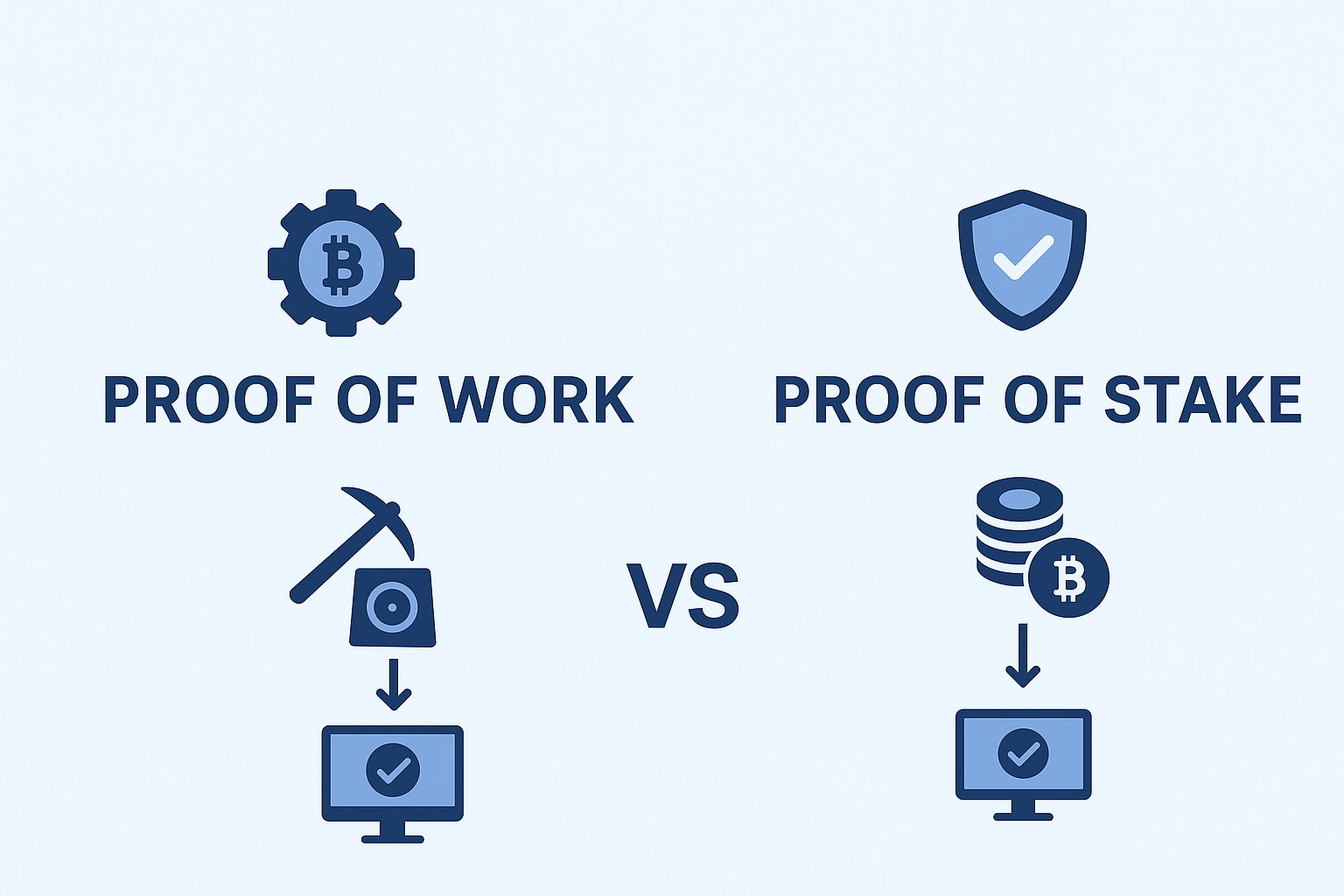
Cryptocurrencies rely on consensus mechanisms to validate transactions and secure the blockchain. Two of the most prominent mechanisms are Proof of Work (PoW) and Proof of Stake (PoS). While PoW was pioneered by Bitcoin and became the original blockchain consensus model, PoS has emerged as a more energy-efficient alternative, adopted by networks like Ethereum, Cardano, and Solana.

What is Proof of Work (PoW)?

Proof of Work is the earliest consensus mechanism, first used in Bitcoin (2009).

  • In PoW, miners compete to solve complex mathematical puzzles using powerful computers.
  • The winner gets the right to validate the block and is rewarded with newly minted coins and transaction fees.
  • This process is called mining.

Key Features of PoW:

  • Security through computational power – Attackers would need massive computing resources to manipulate the blockchain.
  • Decentralization – Anyone with hardware and electricity can participate.
  • High energy consumption – Mining requires enormous electricity, raising environmental concerns.

Examples of PoW Coins: Bitcoin (BTC), Litecoin (LTC), Dogecoin (DOGE).

What is Proof of Stake (PoS)?

Proof of Stake was introduced as an alternative to PoW to reduce energy consumption.

  • In PoS, validators are chosen to create new blocks based on the number of coins they “stake” (lock up as collateral).
  • Instead of competing with computing power, participants are selected randomly, with higher stakers having higher chances.
  • Validators earn rewards for honest participation but risk losing their stake (slashing) if they act maliciously.

Key Features of PoS:

  • Energy efficiency – No need for massive hardware or electricity.
  • Scalability – PoS systems can handle more transactions per second.
  • Security via economic penalties – Malicious actors lose their staked coins.

Examples of PoS Coins: Ethereum (ETH), Cardano (ADA), Solana (SOL), Polkadot (DOT).

Head-to-Head Comparison

AspectProof of Work (PoW)Proof of Stake (PoS)
Energy UseVery high (requires mining rigs & electricity).Very low (validators only run standard computers).
Security ModelBased on computational difficulty (51% attack costly).Based on economic stake (attackers risk losing funds).
AccessibilityRequires expensive hardware & cheap electricity.Anyone holding coins can participate as validator.
Transaction SpeedSlower, limited scalability.Faster, better scalability (more transactions/sec).
DecentralizationTends to centralize around big mining farms.Risks centralization with large stakeholders.
Environmental ImpactHigh carbon footprint.Eco-friendly alternative.
MaturityBattle-tested (Bitcoin has never been hacked).Newer, still evolving but widely adopted.

Which is Better?

There is no absolute “better” mechanism, it depends on the blockchain’s goals:

  • PoW is ideal for maximum security and decentralization (Bitcoin remains the gold standard).
  • PoS is better for scalability, energy efficiency, and modern use cases like smart contracts and decentralized finance.

In practice, the crypto industry is moving towards PoS for sustainability, with Ethereum’s transition being the biggest shift. However, PoW is likely to remain dominant in Bitcoin and a few other projects where energy-backed security is valued.

Conclusion

Proof of Work and Proof of Stake represent two different philosophies in blockchain design: one prioritizes brute-force security, while the other emphasizes efficiency and sustainability. Both play crucial roles in the evolving crypto ecosystem, and understanding their differences is essential for investors, developers, and enthusiasts alike.

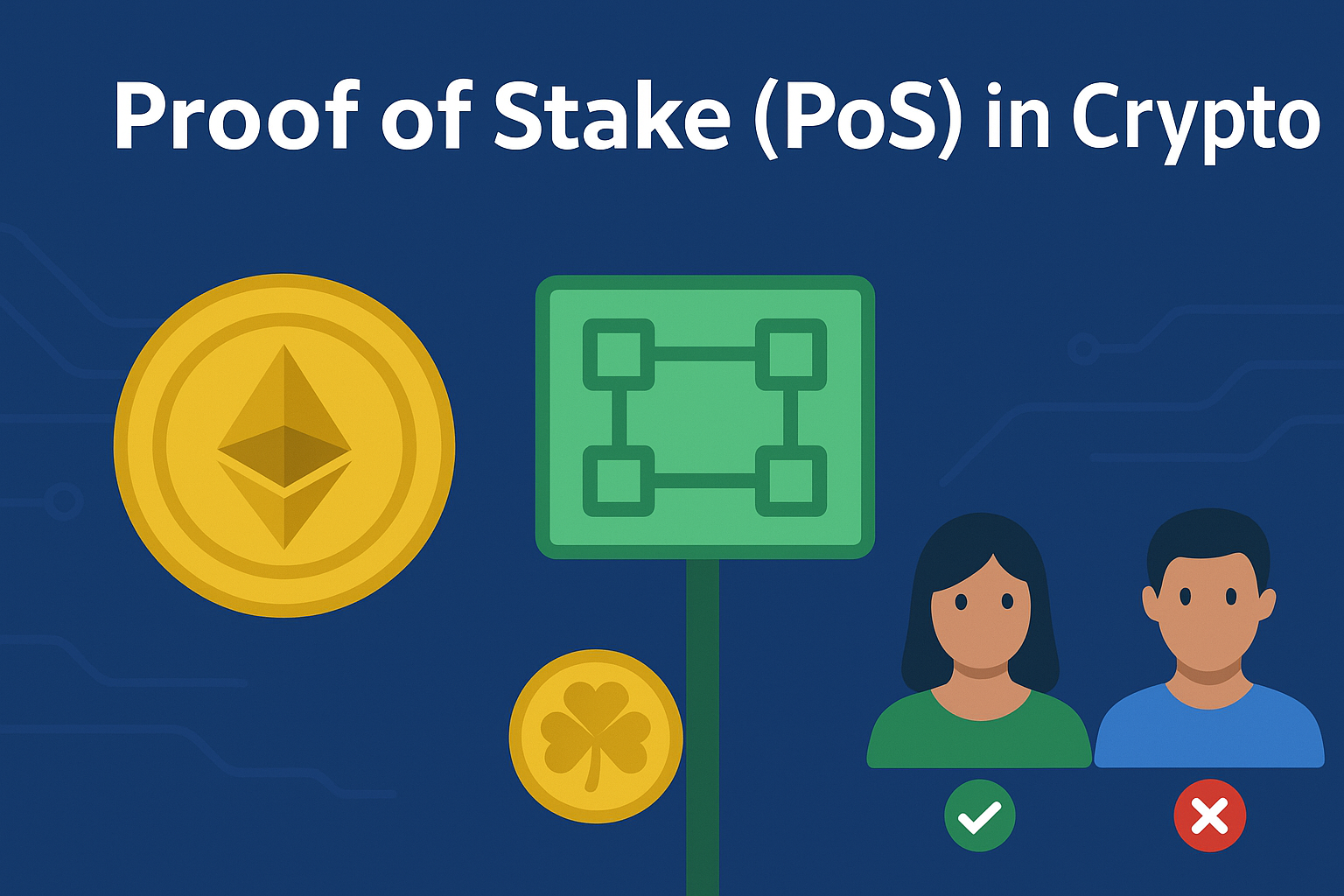
Proof of Stake in Cryptocurrency Explained

0

Cryptocurrencies like Bitcoin and Ethereum rely on special systems, called consensus mechanisms, to make sure transactions are valid and secure without needing a central authority (like a bank).

One of the most popular and eco-friendly mechanisms is Proof of Stake (PoS). It’s a system that rewards people for locking up their crypto and helping keep the network safe, instead of wasting huge amounts of electricity.

What is Proof of Stake?

Proof of Stake is a way for blockchains to decide who gets to add the next block of transactions.

  • In Proof of Work (Bitcoin’s method), miners solve tough puzzles with powerful computers.
  • In Proof of Stake, validators are chosen based on how many coins they “stake” (lock up as collateral).

The bigger the stake, the higher the chance of being chosen.

How Does PoS Work?

Here’s the step-by-step process:

  1. Staking Coins – Users deposit their cryptocurrency (for example, 32 ETH on Ethereum) into the blockchain as collateral.
  2. Random Selection – The network randomly picks one staker (validator) to check transactions and add them to the blockchain.
  3. Validation – The chosen validator reviews the transactions and confirms they are correct.
  4. Reward or Punishment
    • If the validator is honest, they earn rewards (new coins or transaction fees).
    • If they are dishonest, part of their staked coins can be slashed (taken away).

Example in Simple Terms

Imagine a lottery system:

  • Alice stakes 100 coins, Bob stakes 10 coins.
  • Alice has 10 times more “lottery tickets” than Bob.
  • If Alice is selected, she validates transactions and earns extra coins as a reward.
  • But if she cheats, she risks losing her 100 coins.

This way, validators are motivated to be honest.

Benefits of Proof of Stake

  • Energy Efficient – Much greener than Proof of Work (no need for supercomputers).
  • Faster Transactions – Blocks are confirmed quicker.
  • Cheaper Fees – Lower costs compared to Proof of Work.
  • Encourages Holding – People lock up their crypto, reducing circulating supply.

Real-World Examples of PoS

  • Ethereum 2.0 – Switched from PoW to PoS in 2022 (called “The Merge”).
  • Cardano (ADA) – Uses a PoS system called Ouroboros.
  • Solana (SOL) – A high-speed blockchain built on PoS.
  • Polkadot (DOT) – Uses Nominated Proof of Stake (NPoS).

Conclusion

Proof of Stake is the future of blockchain security, it’s efficient, eco-friendly, and scalable. Unlike Proof of Work, it doesn’t waste energy, and it rewards people for contributing honestly to the network. For beginners, you can think of it simply as a crypto lottery system where your “tickets” are the coins you lock up. The more coins you stake, the more chances you have to validate transactions and earn rewards, but with the responsibility of staying honest.

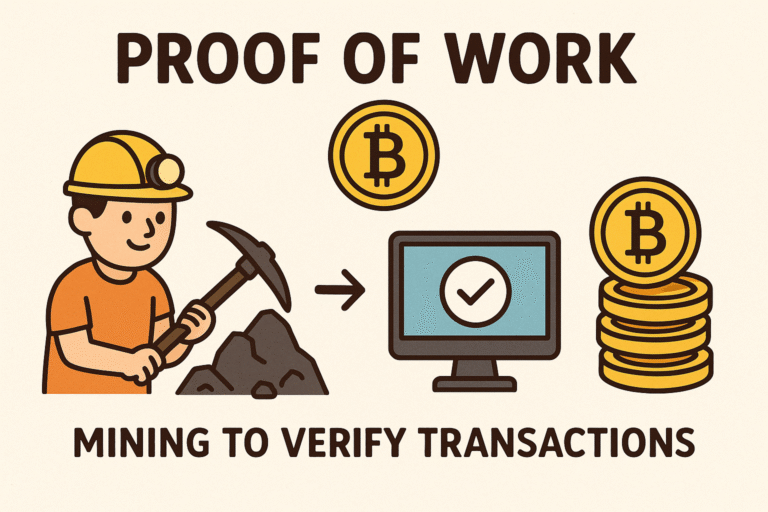
Proof of Work in Cryptocurrency Explained

0

When people hear about Bitcoin or other cryptocurrencies, one term often comes up: Proof of Work (PoW). It sounds technical, but at its core, it’s just a way for computers to agree on who gets to update the blockchain — the public record of all transactions. PoW makes sure no one cheats, while rewarding those who keep the system running.

What is Proof of Work?

Proof of Work is like a digital contest where powerful computers compete to solve very hard math puzzles.

  • The winner gets the right to add a new block of transactions to the blockchain.
  • The winner also earns a reward in cryptocurrency (like Bitcoin).

It’s called “proof of work” because the computer must show it actually did the work (solving the puzzle) before being allowed to add new information.

How Does PoW Work?

Here’s the step-by-step process:

  1. Transactions waiting
    People send crypto (e.g., Alice sends 1 BTC to Bob). These transactions go into a waiting room called the mempool.
  2. Miners get to work
    Miners (specialized computers) gather these pending transactions into a block.
  3. Solving the puzzle
    Miners must solve a math puzzle by making countless guesses. The puzzle is so tough that it may take billions or trillions of tries.
  4. First to solve wins
    The first miner who finds the correct answer shares it with the network. Other miners check the solution quickly.
  5. Block added to blockchain
    Once verified, the block is added to the chain of previous blocks, forming the blockchain. The winning miner earns:
    • New coins, block reward, is currently 6.25 BTC per block (as of 2025).
    • Transaction fees from people who sent coins in that block.

Real-World Analogy

Imagine a classroom:

  • The teacher gives a very hard riddle.
  • All students start guessing answers as fast as they can.
  • The first student who solves it correctly gets to write on the board (like adding a block to the blockchain).
  • As a reward, they also get a chocolate (like earning Bitcoin).

This makes sure only hard workers can win, and nobody can just cheat by shouting an answer.

Bitcoin Example

  • Bitcoin uses Proof of Work to secure its network.
  • A new block is mined roughly every 10 minutes.
  • The mining reward started at 50 BTC in 2009, but it halves every four years (this is called the halving).
  • Today, miners earn 6.25 BTC per block + fees, and the next halving (in 2028) will cut this to 3.125 BTC.

Why is Proof of Work Important?

  • Security – It’s very hard and expensive to attack the Bitcoin network because you’d need massive amounts of computing power.
  • Decentralization – No single authority decides who wins; it’s a fair competition.
  • Trustless system – You don’t need to trust banks or middlemen. The math ensures fairness.

Advantages & Disadvantages

Pros:

  • Extremely secure and battle-tested (used in Bitcoin since 2009).
  • Fair: anyone can participate if they have the hardware.
  • Prevents double-spending and fraud.

Cons:

  • Uses huge amounts of electricity (comparable to small countries).
  • Requires expensive machines (ASIC miners).
  • Mining tends to centralize in regions with cheap electricity.
  • Slower and less energy-efficient compared to alternatives like Proof of Stake.

Conclusion

Proof of Work is the foundation of Bitcoin and many early cryptocurrencies. It ensures fairness, security, and decentralization, but at the cost of high energy use and expensive hardware. While newer systems like Proof of Stake are gaining popularity, PoW remains one of the most trusted and secure ways to run a blockchain.

In simple terms: Proof of Work is like a global puzzle-solving race. The winner adds the next page in the blockchain’s history book and gets rewarded with crypto.

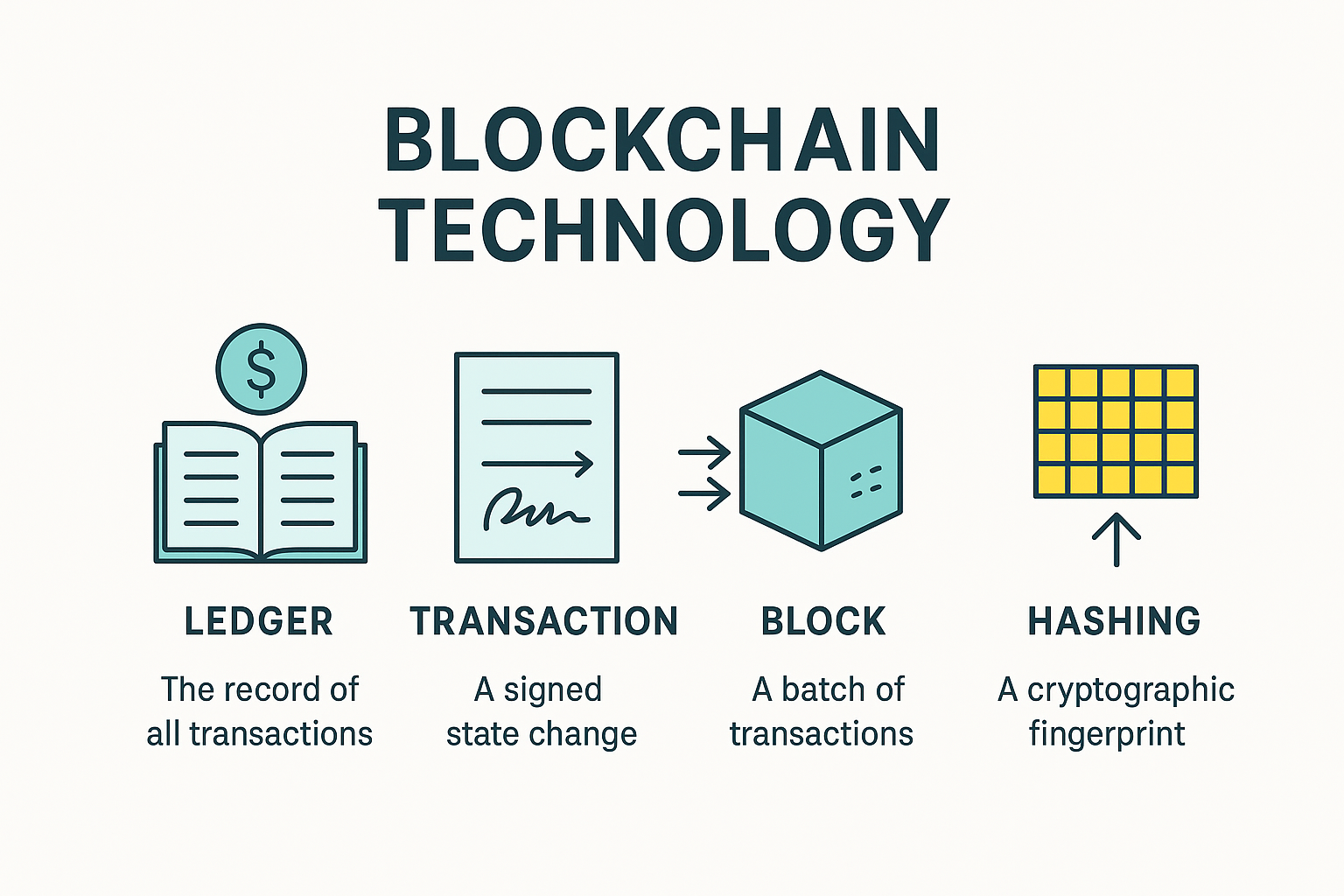
What is a Blockchain?

0

A blockchain is like a digital record book (ledger) that is stored on many computers instead of one.

  • Every page in this book is called a block.
  • These pages are linked together in order, making a chain of blocks (blockchain).
  • Once written, you cannot erase or change past records.

Imagine a notebook that is photocopied and shared with thousands of people. If someone tries to cheat and change one page, it won’t match with everyone else’s copy, so the cheat fails.

How It Works in Crypto

Here’s the step-by-step process:

1. Transaction Starts

  • Example: Ali wants to send 1 Bitcoin to Sara.
  • Ali opens his crypto wallet (like a banking app), enters Sara’s address (her digital account number), and presses send.
  • At this moment, Ali is saying to the network:
    “I want to transfer 1 Bitcoin from me to Sara.”

2. Verification

  • The network of computers (nodes) receives this request.
  • These nodes check:
    Does Ali actually have 1 Bitcoin in his wallet?
    Has Ali already spent this Bitcoin before? (to avoid double spending)
  • If both answers are yes, the transaction is considered valid.

Think of it like a group of shopkeepers verifying if a customer’s cheque has money in the bank before accepting it.

3. Block Creation

  • Valid transactions (Ali → Sara, John → Ayesha, etc.) are bundled together into a block.
  • Each block is like a new page in the digital notebook.
  • This page also contains:
    • A timestamp (date & time)
    • A reference (link) to the previous block
    • A unique digital signature called a hash

It’s like stapling receipts together for the day and signing them to make sure no one can swap them later.

4. Consensus (Agreement by the Network)

  • The network now needs to agree that this new block is correct.
  • This is done through rules called consensus mechanisms:
    • Proof of Work (Bitcoin): Computers solve tough puzzles. First one to solve gets rewarded.
    • Proof of Stake (Ethereum 2.0, Cardano): People who hold coins lock them up to get a chance to validate and earn rewards.

5. Adding to Blockchain

  • Once approved, the new block is permanently added to the chain.
  • This creates a continuous history of all transactions, like a timeline that can’t be changed.

Think of signing a contract in front of witnesses. Once signed and filed, no one can secretly rewrite it.

6. Completion

  • Now Sara officially receives the 1 Bitcoin.
  • Both Ali and Sara can see the transaction on the blockchain (publicly visible, but identities remain hidden behind wallet addresses).

Blockchain in crypto is a shared, tamper-proof ledger that records transactions (like sending Bitcoin, Ethereum, etc.) in a way that everyone can verify, but no one can secretly change.

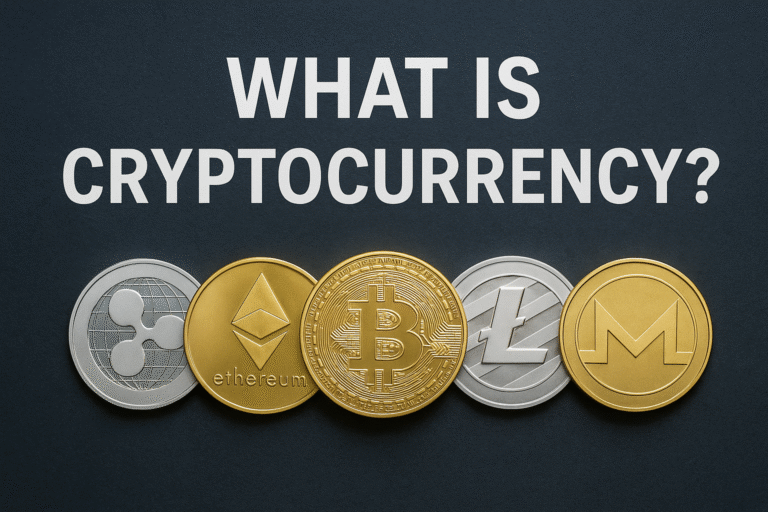
What is Crypto Currency?

0

Cryptocurrency is a type of digital or virtual currency that uses cryptography (advanced encryption techniques) to secure transactions, control the creation of new units, and verify the transfer of assets. Unlike traditional money (such as dollars, euros, or yen), cryptocurrencies are decentralized and typically operate on blockchain technology rather than being issued or regulated by a central authority like a government or bank.

Here’s a detailed breakdown:

1. Core Features of Cryptocurrency

Digital-only

Cryptocurrency exists purely in electronic form and is stored in digital wallets instead of physical wallets. There are no paper notes or coins you can hold.

Example: Bitcoin can only be accessed via a mobile app or computer wallet, not as cash in your pocket.

Decentralized

Unlike traditional money controlled by governments or banks, cryptocurrencies run on peer-to-peer networks. This means no single authority has power over it.

Example: Ethereum transactions are verified by thousands of computers worldwide instead of one central bank.

Blockchain-based

All transactions are stored in a public ledger called a blockchain, where blocks are linked in order and visible to everyone. This ensures transparency and trust.

Example: If you send Bitcoin to a friend, the transaction is permanently recorded on the Bitcoin blockchain.

Secure

Cryptocurrencies use advanced cryptography, making it nearly impossible to forge or alter transactions. This protects users against fraud and hacking.

Example: Digital signatures ensure only the owner of a private key can authorize sending their coins.

Global

They can be transferred across borders instantly, without relying on banks, exchange rates, or intermediaries. This makes them highly accessible worldwide.

Example: A freelancer in Asia can receive payment in Bitcoin from a client in the USA within minutes.

Limited supply

Many cryptocurrencies are designed with a fixed supply limit to prevent inflation and maintain value over time.

Example: Bitcoin has a maximum cap of 21 million coins, which cannot be increased.

2. How It Works

Blockchain ledger

Every cryptocurrency transaction is stored on a blockchain, which acts like a digital record book accessible to everyone. This prevents double spending and builds trust.

Example: If Alice sends Bob 1 Bitcoin, that transfer is permanently recorded on the Bitcoin blockchain for anyone to verify.

Mining / Validation

In Proof of Work (like Bitcoin), miners use powerful computers to solve puzzles, validating transactions and earning rewards. In Proof of Stake, validators lock coins as collateral to secure the network.

Example: A Bitcoin miner who successfully solves a block gets rewarded with new Bitcoins, while an Ethereum validator earns fees for staking ETH.

Wallets

Cryptocurrencies are stored in digital wallets, which can be mobile apps, hardware devices, or even printed keys. They allow users to send, receive, and manage funds.

Example: A user might keep everyday spending crypto in a mobile wallet like MetaMask, while storing large amounts on a hardware wallet like Ledger.

Public key

This is a unique code linked to your wallet, similar to a bank account number. It can be safely shared with others to receive funds.

Example: Bob shares his public key with Alice so she can transfer 0.5 Bitcoin to him.

Private key

This is a secret code that gives full access to your wallet and funds. If someone else gets it, they can steal your coins, so it must be kept secure.

Example: If Bob’s private key is leaked online, hackers could transfer all his crypto to their wallets.

3. Types of Cryptocurrencies

Bitcoin (BTC)

Bitcoin is the original cryptocurrency, created in 2009 by the mysterious Satoshi Nakamoto. It’s mainly used as a digital alternative to money and as a “store of value” like gold.

Example: Many investors buy and hold Bitcoin as a long-term investment against inflation.

Altcoins

These are all cryptocurrencies other than Bitcoin, each with unique features or improvements. Some focus on faster transactions, smart contracts, or lower fees.

Example: Ethereum enables decentralized apps, while Litecoin offers quicker transaction confirmations.

Stablecoins

Stablecoins are linked to real-world assets (like the US dollar) to keep their price steady, reducing the wild swings seen in other cryptos.

Example: USDT (Tether) stays close to $1, making it useful for everyday payments and trading.

Central Bank Digital Currencies (CBDCs)

CBDCs are digital versions of national currencies, issued and controlled by central banks. They aim to combine the speed of crypto with the stability of government money.

Example: China is testing the digital yuan for everyday transactions.

Utility tokens

These tokens are used within specific platforms or ecosystems to pay for services, earn rewards, or access features.

Example: Binance Coin (BNB) gives discounts on trading fees when used on the Binance exchange.

NFTs (Non-Fungible Tokens)

NFTs represent unique digital assets that can’t be swapped one-to-one, unlike regular coins. They are mostly used for digital art, music, and in-game collectibles.

Example: An artist selling a one-of-a-kind digital painting as an NFT on platforms like OpenSea.

4. Advantages

Fast transactions

Cryptocurrency transactions are processed within minutes, unlike traditional bank transfers that may take hours or days, especially across countries.

Example: Sending Bitcoin from the U.S. to Japan can be confirmed in about 10 minutes, compared to 2–3 days with a wire transfer.

Low fees

Transaction fees are often much lower than bank charges or remittance services, especially for international payments.

Example: Sending $1,000 via Western Union might cost $30+, while sending the same in Litecoin could cost less than $1.

Global accessibility

Anyone with an internet connection and a digital wallet can use cryptocurrencies, even in places without reliable banking systems.

Example: A farmer in Africa without a bank account can still receive payments in Bitcoin via a mobile phone.

Privacy

Transactions are pseudonymous, meaning they’re linked to wallet addresses instead of personal names, offering more privacy than banks.

Example: Alice can donate to a charity using her crypto wallet without revealing her full identity.

Innovation

Cryptocurrencies power new technologies like decentralized finance (DeFi), smart contracts, and digital economies that operate without middlemen.

Example: On Ethereum, users can borrow or lend money directly through DeFi platforms like Aave without involving a bank.

5. Risks and Challenges

Volatility

Cryptocurrency prices can rise or fall dramatically in a short period, making them high-risk investments. This unpredictability discourages some people from using them as stable money.

Example: Bitcoin’s price dropped from nearly $69,000 in 2021 to under $20,000 in 2022 within months.

Security risks

Losing access to your private key means permanently losing your funds, since there’s no recovery option like in banks. Hacks of exchanges and wallets also pose major threats.

Example: If someone forgets the password to their hardware wallet, the coins inside become inaccessible forever.

Scams & fraud

The crypto space attracts scams like Ponzi schemes, fake projects, and phishing attempts targeting users’ private keys. New investors are often the most vulnerable.

Example: The “OneCoin” project turned out to be a $4 billion scam that fooled people worldwide.

Regulation

Cryptocurrencies face uncertain legal status, with different countries enforcing different rules. Sudden bans or strict regulations can impact their usage and value.

Example: China banned crypto trading and mining, while countries like El Salvador made Bitcoin legal tender.

Environmental impact

Proof-of-Work mining consumes vast amounts of electricity, raising concerns about carbon footprints and sustainability.

Example: Bitcoin mining alone has been compared to the annual energy usage of entire countries like Argentina.

6. Real-World Uses

Payments

Cryptocurrencies can be used for online and in-store purchases where merchants accept them, offering faster and borderless transactions.

Example: Companies like Microsoft and Overstock accept Bitcoin for certain products and services.

Investment

Many people treat cryptocurrencies as digital assets to hold long-term, expecting their value to rise over time like stocks or gold.

Example: Early Bitcoin investors who bought coins in 2012 saw their value grow massively over the next decade.

Remittances

Cryptocurrency enables quick, low-cost cross-border money transfers, especially useful for people without access to traditional banking.

Example: A worker in the U.S. can send money home to family in Mexico via crypto, avoiding high fees charged by services like Western Union.

Smart contracts

Smart contracts are self-executing programs on blockchains that run automatically when conditions are met, removing the need for intermediaries.

Example: On Ethereum, a smart contract can automatically release payment once goods are delivered.

Decentralized Finance (DeFi)

DeFi platforms offer financial services like lending, borrowing, and trading directly on blockchain networks, without banks or brokers.

Example: On Aave, users can borrow cryptocurrency by providing collateral, all managed by code.

Digital ownership

Through NFTs and tokenization, cryptocurrencies allow proof of ownership for digital or even physical assets.

Example: An artist can sell a unique digital artwork as an NFT on OpenSea, giving buyers verifiable ownership rights.

Summary

Cryptocurrency is money that exists only on the internet and not in physical form like coins or notes. It runs on blockchain, a public digital record that keeps all transactions safe and transparent. Unlike normal money, it is not controlled by banks or governments but by a global network of computers. Bitcoin and Ethereum are the most popular examples, while stablecoins and NFTs have special uses. People like crypto because it is fast, has low fees, and can be used worldwide. But it also has risks like big price changes, scams, and loss of money if keys are lost. Some cryptos also use a lot of energy to operate. Still, it is becoming popular for online payments, investments, and even digital ownership like art or music.

Pakistan allocates 2000 MW for Bitcoin mining in the country

0

Things are looking bright for Pakistan’s crypto industry. Positive news is coming frequently for crypto sector which has seen long years of sanctions. According to latest reports, the government of Pakistan has allocated 2000 MW of power only for Bitcoin mining in the country. This allocation of power for Bitcoin mining, when the price is hovering around $107,000, is a fresh breeze of air for once neglected industry. This move will most likely help attract investor in crypto sector of Pakistan, which can further boost economy. Duty exemptions for bitcoin miners are already on the horizon for interested parties.

For many asking the question if crypto legal in Pakistan for years are now getting good news more often than ever. Such news is a big booster for developing economy of the country as investors are visiting Pakistan for potential partnerships for a couple of months. Investor confidence in the country’s economy is growing, and the stock market is reflecting this trend with increasing strength.

In the first quarter of 2025, Pakistani government appointed Changpeng Zhao known as CZ, the former CEO of Binance as an advisor for Pakistan Crypto Council, PCC. The PCC was created with the aim to integrate blockchain technology with the current financial system. The country is considered an economic hub despite its political and economic challenges. The current government has shown determination to transform the web 3 landscape in Pakistan to stay competitive at global stage.

The appointment of CZ as an advisor to the council came as a surprise to many, but was widely appreciated. His role is to promote crypto adoption at grass root level, modernize blockchain infrastructure and formulating a regulatory framework which will enable the country to leverage crypto for its advantage. CZ is known for his commitment to crypto industry as Binance became the largest crypto exchange in the world under his auspice supervision.

What is DYOR in crypto?

DYOR is the term widely used in crypto which stands for “Do Your Own Research”.

DYOR is very crucial for any investor or trader while making any investment decisions in all financial markets but especially when it comes to crypto, your own analysis and research makes a huge difference. Doing research on your own helps you to understand market dynamics which lets you make sound financial decisions.

Artificial hype of a new token or coin is created by famous influencers in crypto but the said project do not have any substantial backing for further development or they may not have any intention of further progression after investors have made significant profits. So, without proper research, you shall not invest money in new tokens based on mere hype. Such tokens most of the time, crash overnight without any warning signs, making investors lose all their savings. DYOR helps you avoid any possible financial scam.

Every other day, new projects are being introduced in crypto sphere but not all of them are worth investing. You, as an investor, must make sure not to fall for “Rich quick schemes” by investing in these tokens.

Why is DYOR important?

DYOR is always recommended by financial gurus for many reasons.

  • It helps you recognize fishy projects at very early stage.
  • It enables you to acquire and analyze information about projects, that in turn can multiply your investment by 5 to 10x.
  • With DYOR, you can help avoid media pressure of buying assets with zero real life value, which helps you protect your life savings.
  • DYOR helps you with FOMO. ‘Fear Of Missing Out’ is the number one reason people lose money in crypto. DYOR teaches you to take sound decisions rather than merely relying on emotions.

As a newbie in trading, you might feel overwhelm in the beginning with a lot of information spreading on internet or social media. But if you DYOR, you are likely to make informed decisions regarding your investment.

How to DYOR in crypto?

  • The very first thing you can do is to get your first-hand information from credible websites. Binance is the number one cryptocurrency exchange in the world with high credibility. CoinMarketCap is another important website for judging credibility of crypto assets.
  • Another step is to access information from credible investors or traders who have worked in the field for years. You must be able to differentiate between a seasoned trader and an influencer who might be shilling certain projects for monetary gains. Information from credible sources help form better decisions in crypto.
  • Make sure if you do not have enough information about a certain project even after doing much research, do not invest on mere promises of 10x or 100x gains. Instead, invest in projects which have been there for a while and have shown credibility over the years. Little profit is always better than losing everything to hype. Investing in coins like Bitcoin, Ethereum, ADA to start with can be a good judgement call.
  • DYOR helps you to keep updated with market trends about coins that you may have invested in. As crypto market is highly volatile, projects might get revamped, development teams change, hacks or some other uncertainties may occur overnight so you should keep yourself updated with latest information to avoid losses.

DYOR in crypto is always advised as making your own decisions based on information available helps with better decisions.

Pi token sees 40% increase in 24 hours: Speculations of possible Binance listing

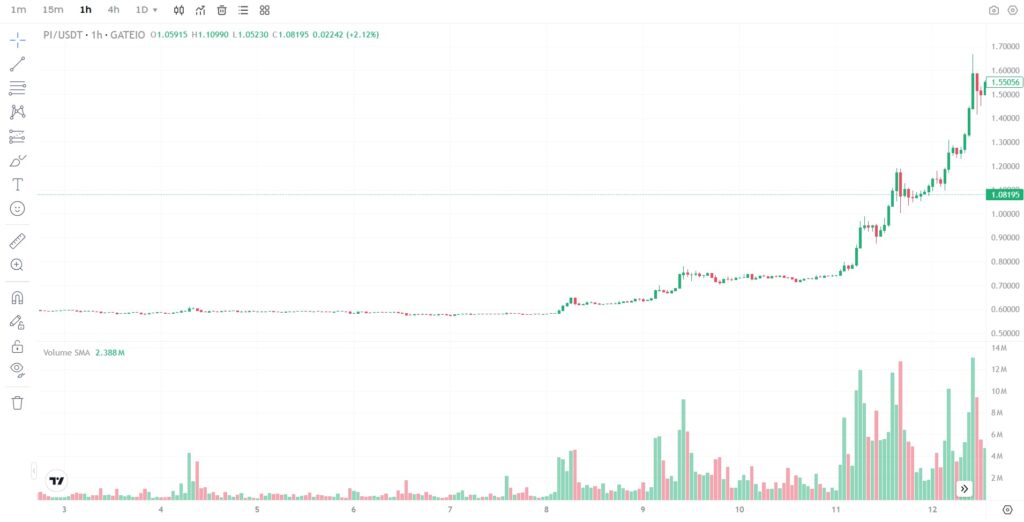
Pi Token has surged 40% in last 24 hours and on the hourly chart it is showing a strong bullish momentum. The positive trend is seen after the speculations circulating in crypto community again that Pi coin Binance listing is on the horizon in coming days. The news of Pi Binance listing was also previously circulating on internet but it never went through which led Pi token to drop from $3 to $0.38 in a couple of months.

Pi Network is also about to see an important update on May 14th which can be pretty significant for the Pi ecosystem.

However, no news of potential Pi listing on Binance has been confirmed by either party but this price surge in such a short span has increased interest of crypto community as they say “Buy the rumor, sell the news”.

Moreover, it has also been reported that a whale wallet on OKX exchange recently purchased 70 million Pi tokens which may also be associated with the speculative news of possible listing on Binance.

The price of Pi token may reach $1.5 in short term. But if Binance goes through with listing, the price may reclaim above $2.

One important detail to know is that a big chunk of Pi token holders are unable to sell their coins till 2028 as mostly are locked for 3 years.

Pepe coin’s more than 40% surge in a day may set momentum for other meme coins

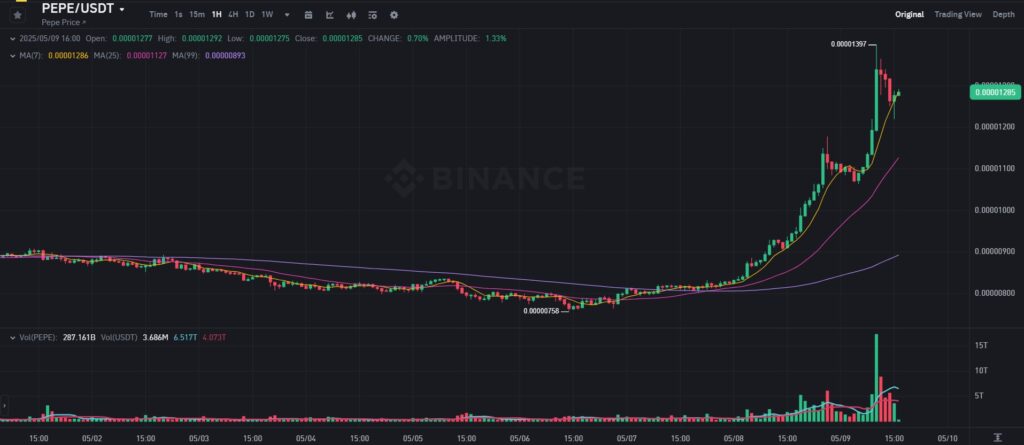
After losing more than 60% of its value in the beginning of 2025, Pepe Coin is up 43% at the time of writing with in a single day as Bitcoin reclaims above 100,000 USD on May 8th. The meme coin seems to set the upward momentum for other meme coins if Bitcoin shows resistance above 100K.

Pepe is currently trading at 0.00001285 after showing sideways movements in the first quarter of 2025. Pepe is although a meme coin but its community is very strong which makes Pepe a market mover for meme tokens with its sharp price surges in short term.

Technical indicators were suggesting that a bullish momentum will form eventually for Pepe as the coin was holding resistance at around $0.00000784 for almost a month after seeing sharp decline in price over the months.

As far as the meme coin tokens are concerned, Pepe has outshined other meme coins like Shiba Inu and Doge since its launch in 2023.

Meme coins like Floki and Meme are also showing bullish divergence following Pepe with a 25% and 23% increase respectively in prices over last 24 hours.

Will Pepe coin reach 1 dollar?

Well, it is likely that in coming months or years, Pepe coin lose one of the zeros in its price but reaching $1 is highly unlikely. Current market cap of Pepe is a over $5 billion. With a total supply of 420.68 trillion Pepe, touching $1 means, market cap will reach $420 trillion. With current global GDP hovering around $100 trillion, it seems highly unlikely.

Bull Market price prediction?

During bull market, Pepe can easily reach to market cap of $50 billion to $70 billion, achieving price between $0.00012 and $0.00017.

Pepe coin leads crypto market with 700% increase in over a week

Pepe coin is leading the crypto market as the price of the meme coin has seen a parabolic surge since last week. On a one-week chart, Pepe coin has shown price increase of almost 700% which is absolutely insane but definitely a strong start for the lovers of meme coins.

As the leader of the crypto market, Bitcoin is nearing its halving and is about to make “ALL TIME HIGH” after hitting $65000 on the charts today after 3 years, many altcoins and meme coins are also slowly waking up.

Pepe is trading at $0.000007 at the time of writing with a $2.7B market cap. In the last 24 hour, the coin’s trading volume has been around $1.10B. 50% price increase has been seen only in the last 24 hours.

The exponential price increase and positive sentiment of the market suggests that investment interest will grow in Pepe coin for long positions as prices are nothing at the moment compared to what analysts believe they will hit during a robust bull cycle after Bitcoin halving.

What is Pepe coin?

Pepe is a meme coin which is based on a cartoon character named as “Pepe the Frog”. It was created in April 2023 by an anonymous team for entertainment purposes only. It was built on Ethereum Blockchain. Shortly after its launch, it gained popularity and started trending on the market charts. It took only less than a month for Pepe to reach a $1Billion market cap which took Doge coin almost four years (another popular meme coin). This explains a lot about the crazy community behind the meme coin as hitting these highs is absolutely insane specially for a meme coin without any “Musk” effect!!!

Is it right time to invest in Pepe?

Well with crypto, only one thing is certain and that is “Uncertainty”. Within minutes, markets can go sideways without any solid financial reason. But currently looking at the market sentiment, Pepe can turn out to be a good investment for your portfolio. But prices can also see sharp decline and pullbacks are always there so it is better to look for an entry point.

How much should you invest in Pepe?

As Pepe is a meme coin with an anonymous team with no intrinsic value behind, it is better to always be careful with your sentiments. FOMO is never good when prices have seen 5x or 6x in timeframe of a week. May be 1% to 2% should be a safe option for anyone to invest in Pepe for long term gains as it definitely has the potential to challenge many meme coins like Bonk and Shiba Inu.