

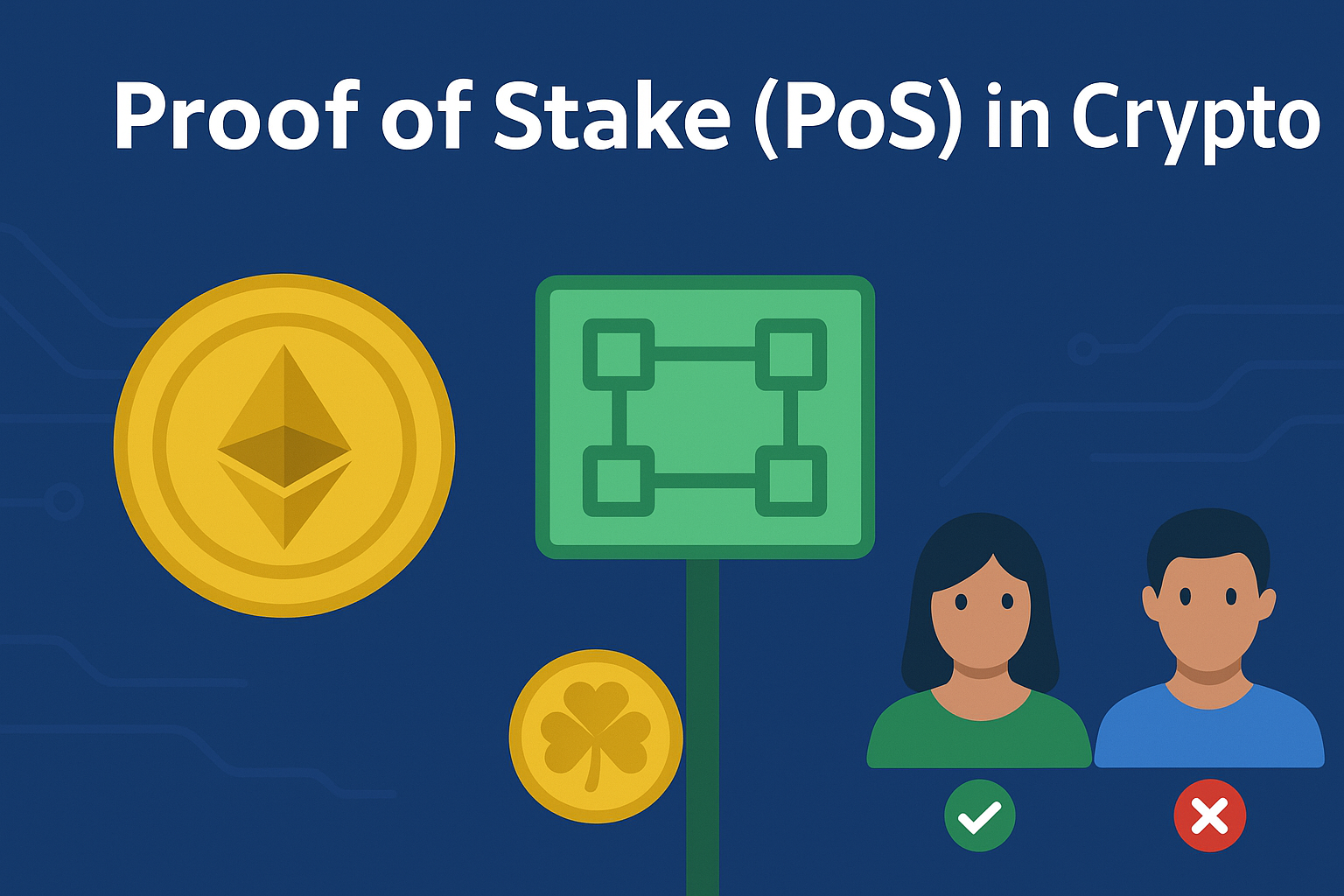
Cryptocurrencies like Bitcoin and Ethereum rely on special systems, called consensus mechanisms, to make sure transactions are valid and secure without needing a central authority (like a bank).
One of the most popular and eco-friendly mechanisms is Proof of Stake (PoS). It’s a system that rewards people for locking up their crypto and helping keep the network safe, instead of wasting huge amounts of electricity.
What is Proof of Stake?
Proof of Stake is a way for blockchains to decide who gets to add the next block of transactions.
- In Proof of Work (Bitcoin’s method), miners solve tough puzzles with powerful computers.
- In Proof of Stake, validators are chosen based on how many coins they “stake” (lock up as collateral).
The bigger the stake, the higher the chance of being chosen.
How Does PoS Work?
Here’s the step-by-step process:
- Staking Coins – Users deposit their cryptocurrency (for example, 32 ETH on Ethereum) into the blockchain as collateral.
- Random Selection – The network randomly picks one staker (validator) to check transactions and add them to the blockchain.
- Validation – The chosen validator reviews the transactions and confirms they are correct.
- Reward or Punishment
- If the validator is honest, they earn rewards (new coins or transaction fees).
- If they are dishonest, part of their staked coins can be slashed (taken away).
Example in Simple Terms
Imagine a lottery system:
- Alice stakes 100 coins, Bob stakes 10 coins.
- Alice has 10 times more “lottery tickets” than Bob.
- If Alice is selected, she validates transactions and earns extra coins as a reward.
- But if she cheats, she risks losing her 100 coins.
This way, validators are motivated to be honest.
Benefits of Proof of Stake
- Energy Efficient – Much greener than Proof of Work (no need for supercomputers).
- Faster Transactions – Blocks are confirmed quicker.
- Cheaper Fees – Lower costs compared to Proof of Work.
- Encourages Holding – People lock up their crypto, reducing circulating supply.
Real-World Examples of PoS
- Ethereum 2.0 – Switched from PoW to PoS in 2022 (called “The Merge”).
- Cardano (ADA) – Uses a PoS system called Ouroboros.
- Solana (SOL) – A high-speed blockchain built on PoS.
- Polkadot (DOT) – Uses Nominated Proof of Stake (NPoS).
Conclusion
Proof of Stake is the future of blockchain security, it’s efficient, eco-friendly, and scalable. Unlike Proof of Work, it doesn’t waste energy, and it rewards people for contributing honestly to the network. For beginners, you can think of it simply as a crypto lottery system where your “tickets” are the coins you lock up. The more coins you stake, the more chances you have to validate transactions and earn rewards, but with the responsibility of staying honest.