
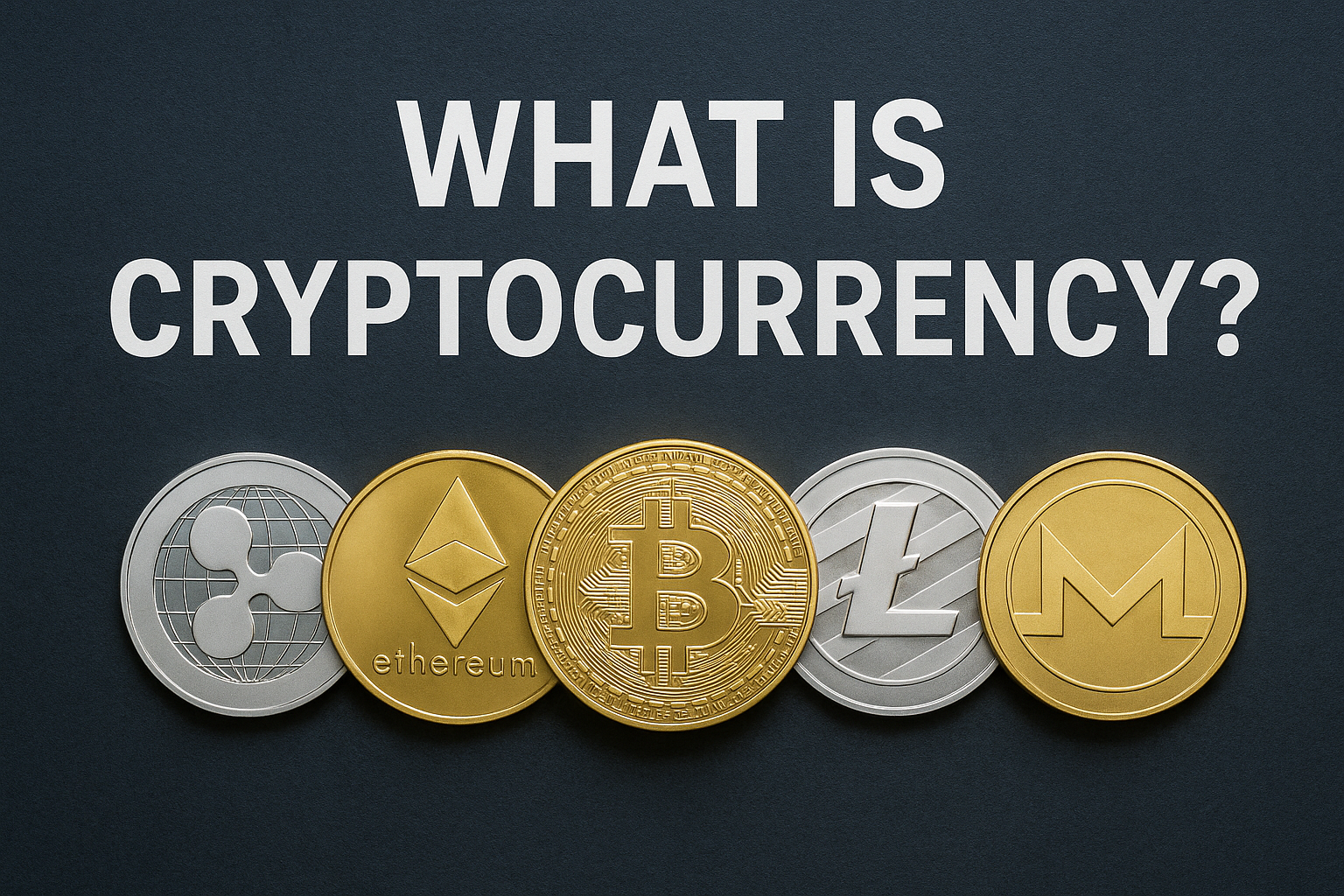
Cryptocurrency is a type of digital or virtual currency that uses cryptography (advanced encryption techniques) to secure transactions, control the creation of new units, and verify the transfer of assets. Unlike traditional money (such as dollars, euros, or yen), cryptocurrencies are decentralized and typically operate on blockchain technology rather than being issued or regulated by a central authority like a government or bank.
Here’s a detailed breakdown:
1. Core Features of Cryptocurrency
Digital-only
Cryptocurrency exists purely in electronic form and is stored in digital wallets instead of physical wallets. There are no paper notes or coins you can hold.
Example: Bitcoin can only be accessed via a mobile app or computer wallet, not as cash in your pocket.
Decentralized
Unlike traditional money controlled by governments or banks, cryptocurrencies run on peer-to-peer networks. This means no single authority has power over it.
Example: Ethereum transactions are verified by thousands of computers worldwide instead of one central bank.
Blockchain-based
All transactions are stored in a public ledger called a blockchain, where blocks are linked in order and visible to everyone. This ensures transparency and trust.
Example: If you send Bitcoin to a friend, the transaction is permanently recorded on the Bitcoin blockchain.
Secure
Cryptocurrencies use advanced cryptography, making it nearly impossible to forge or alter transactions. This protects users against fraud and hacking.
Example: Digital signatures ensure only the owner of a private key can authorize sending their coins.
Global
They can be transferred across borders instantly, without relying on banks, exchange rates, or intermediaries. This makes them highly accessible worldwide.
Example: A freelancer in Asia can receive payment in Bitcoin from a client in the USA within minutes.
Limited supply
Many cryptocurrencies are designed with a fixed supply limit to prevent inflation and maintain value over time.
Example: Bitcoin has a maximum cap of 21 million coins, which cannot be increased.
2. How It Works
Blockchain ledger
Every cryptocurrency transaction is stored on a blockchain, which acts like a digital record book accessible to everyone. This prevents double spending and builds trust.
Example: If Alice sends Bob 1 Bitcoin, that transfer is permanently recorded on the Bitcoin blockchain for anyone to verify.
Mining / Validation
In Proof of Work (like Bitcoin), miners use powerful computers to solve puzzles, validating transactions and earning rewards. In Proof of Stake, validators lock coins as collateral to secure the network.
Example: A Bitcoin miner who successfully solves a block gets rewarded with new Bitcoins, while an Ethereum validator earns fees for staking ETH.
Wallets
Cryptocurrencies are stored in digital wallets, which can be mobile apps, hardware devices, or even printed keys. They allow users to send, receive, and manage funds.
Example: A user might keep everyday spending crypto in a mobile wallet like MetaMask, while storing large amounts on a hardware wallet like Ledger.
Public key
This is a unique code linked to your wallet, similar to a bank account number. It can be safely shared with others to receive funds.
Example: Bob shares his public key with Alice so she can transfer 0.5 Bitcoin to him.
Private key
This is a secret code that gives full access to your wallet and funds. If someone else gets it, they can steal your coins, so it must be kept secure.
Example: If Bob’s private key is leaked online, hackers could transfer all his crypto to their wallets.
3. Types of Cryptocurrencies
Bitcoin (BTC)
Bitcoin is the original cryptocurrency, created in 2009 by the mysterious Satoshi Nakamoto. It’s mainly used as a digital alternative to money and as a “store of value” like gold.
Example: Many investors buy and hold Bitcoin as a long-term investment against inflation.
Altcoins
These are all cryptocurrencies other than Bitcoin, each with unique features or improvements. Some focus on faster transactions, smart contracts, or lower fees.
Example: Ethereum enables decentralized apps, while Litecoin offers quicker transaction confirmations.
Stablecoins
Stablecoins are linked to real-world assets (like the US dollar) to keep their price steady, reducing the wild swings seen in other cryptos.
Example: USDT (Tether) stays close to $1, making it useful for everyday payments and trading.
Central Bank Digital Currencies (CBDCs)
CBDCs are digital versions of national currencies, issued and controlled by central banks. They aim to combine the speed of crypto with the stability of government money.
Example: China is testing the digital yuan for everyday transactions.
Utility tokens
These tokens are used within specific platforms or ecosystems to pay for services, earn rewards, or access features.
Example: Binance Coin (BNB) gives discounts on trading fees when used on the Binance exchange.
NFTs (Non-Fungible Tokens)
NFTs represent unique digital assets that can’t be swapped one-to-one, unlike regular coins. They are mostly used for digital art, music, and in-game collectibles.
Example: An artist selling a one-of-a-kind digital painting as an NFT on platforms like OpenSea.
4. Advantages
Fast transactions
Cryptocurrency transactions are processed within minutes, unlike traditional bank transfers that may take hours or days, especially across countries.
Example: Sending Bitcoin from the U.S. to Japan can be confirmed in about 10 minutes, compared to 2–3 days with a wire transfer.
Low fees
Transaction fees are often much lower than bank charges or remittance services, especially for international payments.
Example: Sending $1,000 via Western Union might cost $30+, while sending the same in Litecoin could cost less than $1.
Global accessibility
Anyone with an internet connection and a digital wallet can use cryptocurrencies, even in places without reliable banking systems.
Example: A farmer in Africa without a bank account can still receive payments in Bitcoin via a mobile phone.
Privacy
Transactions are pseudonymous, meaning they’re linked to wallet addresses instead of personal names, offering more privacy than banks.
Example: Alice can donate to a charity using her crypto wallet without revealing her full identity.
Innovation
Cryptocurrencies power new technologies like decentralized finance (DeFi), smart contracts, and digital economies that operate without middlemen.
Example: On Ethereum, users can borrow or lend money directly through DeFi platforms like Aave without involving a bank.
5. Risks and Challenges
Volatility
Cryptocurrency prices can rise or fall dramatically in a short period, making them high-risk investments. This unpredictability discourages some people from using them as stable money.
Example: Bitcoin’s price dropped from nearly $69,000 in 2021 to under $20,000 in 2022 within months.
Security risks
Losing access to your private key means permanently losing your funds, since there’s no recovery option like in banks. Hacks of exchanges and wallets also pose major threats.
Example: If someone forgets the password to their hardware wallet, the coins inside become inaccessible forever.
Scams & fraud
The crypto space attracts scams like Ponzi schemes, fake projects, and phishing attempts targeting users’ private keys. New investors are often the most vulnerable.
Example: The “OneCoin” project turned out to be a $4 billion scam that fooled people worldwide.
Regulation
Cryptocurrencies face uncertain legal status, with different countries enforcing different rules. Sudden bans or strict regulations can impact their usage and value.
Example: China banned crypto trading and mining, while countries like El Salvador made Bitcoin legal tender.
Environmental impact
Proof-of-Work mining consumes vast amounts of electricity, raising concerns about carbon footprints and sustainability.
Example: Bitcoin mining alone has been compared to the annual energy usage of entire countries like Argentina.
6. Real-World Uses
Payments
Cryptocurrencies can be used for online and in-store purchases where merchants accept them, offering faster and borderless transactions.
Example: Companies like Microsoft and Overstock accept Bitcoin for certain products and services.
Investment
Many people treat cryptocurrencies as digital assets to hold long-term, expecting their value to rise over time like stocks or gold.
Example: Early Bitcoin investors who bought coins in 2012 saw their value grow massively over the next decade.
Remittances
Cryptocurrency enables quick, low-cost cross-border money transfers, especially useful for people without access to traditional banking.
Example: A worker in the U.S. can send money home to family in Mexico via crypto, avoiding high fees charged by services like Western Union.
Smart contracts
Smart contracts are self-executing programs on blockchains that run automatically when conditions are met, removing the need for intermediaries.
Example: On Ethereum, a smart contract can automatically release payment once goods are delivered.
Decentralized Finance (DeFi)
DeFi platforms offer financial services like lending, borrowing, and trading directly on blockchain networks, without banks or brokers.
Example: On Aave, users can borrow cryptocurrency by providing collateral, all managed by code.
Digital ownership
Through NFTs and tokenization, cryptocurrencies allow proof of ownership for digital or even physical assets.
Example: An artist can sell a unique digital artwork as an NFT on OpenSea, giving buyers verifiable ownership rights.
Summary
Cryptocurrency is money that exists only on the internet and not in physical form like coins or notes. It runs on blockchain, a public digital record that keeps all transactions safe and transparent. Unlike normal money, it is not controlled by banks or governments but by a global network of computers. Bitcoin and Ethereum are the most popular examples, while stablecoins and NFTs have special uses. People like crypto because it is fast, has low fees, and can be used worldwide. But it also has risks like big price changes, scams, and loss of money if keys are lost. Some cryptos also use a lot of energy to operate. Still, it is becoming popular for online payments, investments, and even digital ownership like art or music.